
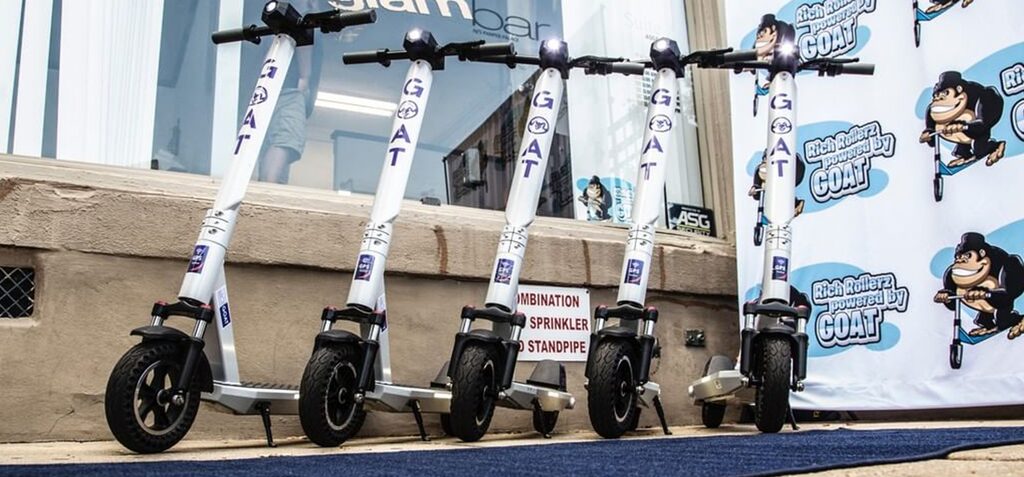
You can optimize pricing, hardware, and ops, but the single decision that does the most to determine whether your fleet is profitable is where you put the scooters. The same 30-unit Goat fleet generates $4,000/month at one site and $18,000/month at another — same gear, same pricing, completely different geography. This article gives you the diagnostic framework we use to read a site before quoting it.
The five-question site qualifier
Before you talk pricing, before you walk the property, run through these five questions. If you can't answer "yes" to at least four, the site is going to underperform regardless of how well you operate.
- Is there a defined population of 500+ daily users on the site?
- Are origins and destinations spread across at least a quarter mile?
- Is there a single decision-maker who can sign and pay?
- Is the site free of competing public scooter operators?
- Is the climate ridable at least 9 months a year?
Power Design's St. Petersburg campus hits all five — large defined workforce, multi-building footprint, single corporate signer, no competing operators on private property, and Florida weather year-round.
Campus geometry: the sweet spot is half a mile to two miles
Distance is the variable that creates demand. Too short and people walk; too long and they drive. The sweet spot for scooter ridership is a half-mile to two-mile point-to-point trip. Walking a half mile takes 10 minutes; scootering it takes 90 seconds. That's the entire value proposition.
Map your candidate site against these distance bands:
- Under 1/4 mile: walkable, low scooter demand
- 1/4 to 1/2 mile: walkable but unpleasant in heat or rain — moderate demand
- 1/2 to 1 mile: the sweet spot, riders consistently choose scooters
- 1 to 2 miles: very high demand, but battery management gets harder
- Over 2 miles: people drive or shuttle
Look at building-to-building distances on a campus map. If most of your origin-destination pairs land in the 1/2 to 1.5 mile range, you've found a winner.
Density: where the riders actually are
Raw headcount matters less than concentrated headcount. A 5,000-employee campus where everyone parks at one garage and walks to one tower is a worse scooter site than a 1,500-employee campus with parking, dining, fitness, and four office buildings spread across 30 acres.
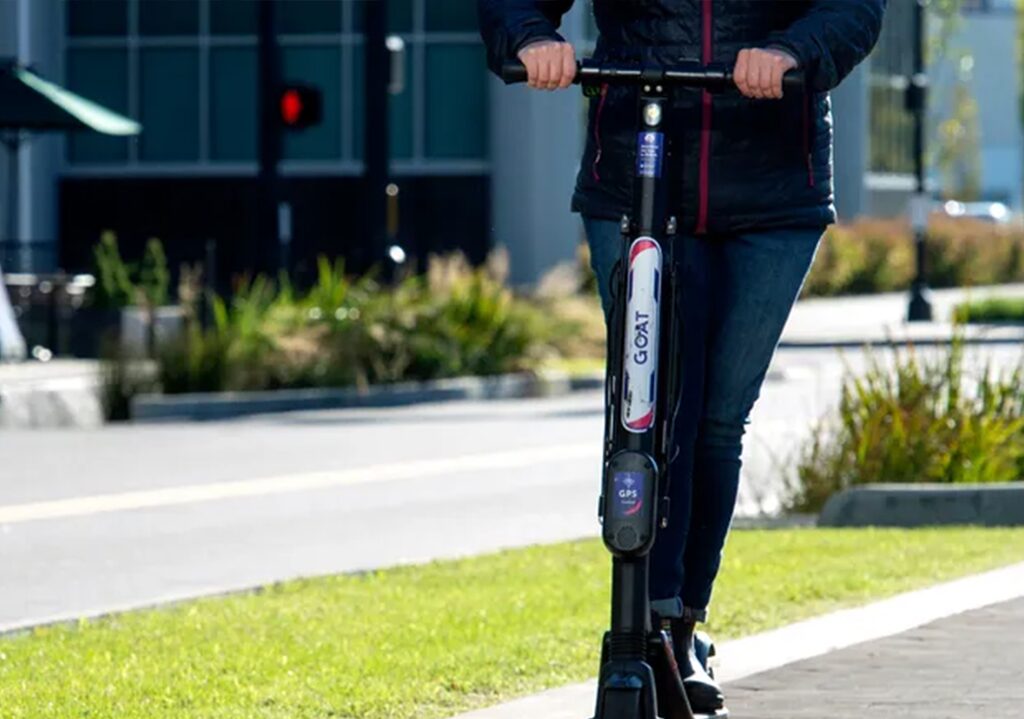
Three density signals worth checking:
- Parking-to-destination distance: the further people park from their primary destination, the higher your day-one demand
- Internal amenity spread: cafeteria, gym, conference center in different buildings creates midday demand
- Adjacent off-site amenities: coffee shops, lunch spots, retail within scooter range but outside walking range create lunch-hour spikes
Best-case demand profiles have three peaks: morning (parking → office), midday (office → lunch/gym), and evening (office → parking). That's six trips per worker per day available to capture.
Weather windows: the climate-adjusted ride year
Scooter ridership drops sharply below 45°F, in measurable rain, and above 95°F with high humidity. When you're underwriting a site, calculate the "ridable days" per year and apply that to your revenue model.
Approximate ridable-day counts by region:
- South Florida, Phoenix, Southern California: 320-345 days/year
- Texas, Georgia, Carolinas, Central Florida: 280-310 days/year
- Mid-Atlantic, Pacific Northwest: 220-260 days/year
- Northeast, Upper Midwest: 180-210 days/year
This is why Florida campuses are such fertile ground for fleet operators — the unit economics on 340 ridable days look very different from 200. Northern climate sites can absolutely work, but you'll want to pull units off-property for winter storage, which is a real op cost.
Property type playbook: where each site type wins
Corporate campuses
Best for property-paid models. Single signer, predictable peaks, low rebalancing burden, no competing operators. The Power Design St. Pete deployment is the canonical example.
Master-planned residential communities
Strong fit for amenity-funded fleets. Use cases include trips to clubhouse, pool, mailbox center, and adjacent retail. HOAs often pay through amenity budgets that are already approved, which shortens the sales cycle.
Hotels and resorts
Day-pass model wins. Guests want low-friction transportation around the property and to nearby restaurants. Concierge teams become your distribution channel.
Business parks
Mixed-tenant sites favor either a property-paid arrangement funded by the landlord or a per-minute model with multiple tenant adoption campaigns. Slightly harder sale, larger TAM.
Universities
Massive demand but often locked up by national operators. If you can win a private campus or a satellite campus, the volume is excellent.
The single deal-killer to screen for
Before you spend any time on a site, confirm there's no incumbent shared mobility operator with exclusive rights. Some campuses signed five-year exclusivity deals with Lime or Spin in 2019-2021 that are still in effect. If you're hearing pushback you can't explain, an exclusivity clause is usually the reason. Get the property to put it in writing that there are no encumbrances before you build a proposal.
Ready to launch your fleet?
If you're sizing the opportunity, run the numbers in our revenue calculator — plug in your own scooter count, ride volume, and pricing to project monthly gross. To see what's available right now, browse our pre-owned fleets (Segway Max 2.3 in great condition, 10-unit minimum) or email hello@ridegoat.com with your situation and we'll send a tailored proposal within one business day.