
Permitting is where many would-be fleet operators get discouraged. Between city RFPs, vehicle registration, equipment standards, parking rules, and data-sharing requirements, the regulatory matrix can look impenetrable. Here's the operator's truth: most of those barriers only apply to public-right-of-way deployments. If you're targeting private property — corporate campuses, hotels, residential communities, business parks — you can sidestep the heaviest regulatory load entirely. This article maps the 2026 landscape and shows you how to deploy fast without cutting corners.
Public vs. private property: the deployment fork
The single most important regulatory decision is whether you'll deploy on public streets or private property. The two paths look almost nothing alike.
Public-right-of-way deployments
Operating on city streets typically requires a municipal permit, often awarded via competitive RFP. The standard package includes:
- RFP response (often 100+ pages)
- Per-scooter annual fee, typically $50-$200 per unit
- Vehicle caps that limit fleet size
- Equipment standards (lights, bell, max speed cap, GPS reporting)
- Required data sharing with the city via MDS (Mobility Data Specification)
- Parking rules — designated corrals or specific GPS-confirmed parking areas
- Performance metrics with possible fines for violations
Lead times of 6-18 months from RFP issue to first ride are normal. Many cities have closed their permitting to new operators entirely after settling on 2-3 incumbents.
Private property deployments
On private property — anywhere a single landowner has authority — you generally don't need a municipal permit. You operate under a contract with the property owner. State motor vehicle laws may still apply (e.g., max speed, age restrictions, light requirements after dark), but the city RFP process is bypassed.
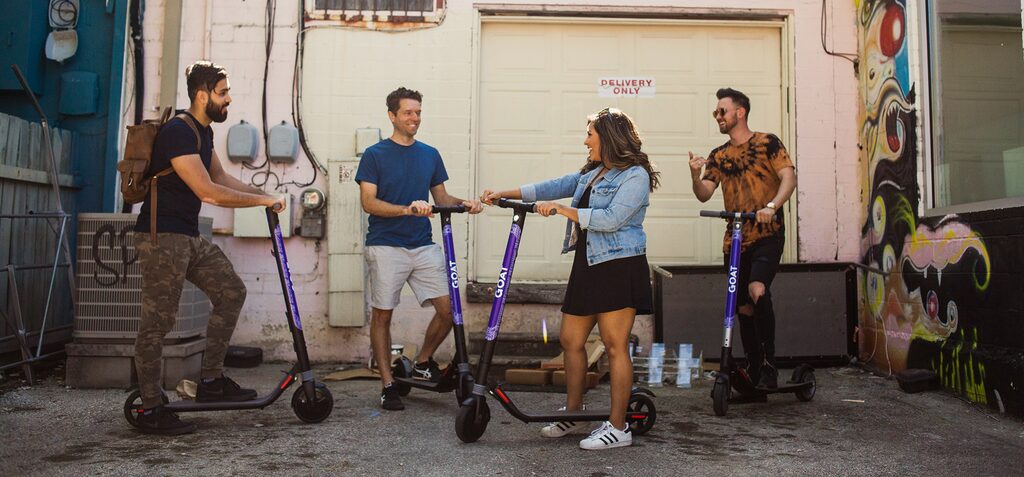
This is why corporate campuses, hospitality, and residential communities have become the first wave for new operators in 2024-2026. The regulatory load is dramatically lighter and time-to-revenue is weeks instead of years.
State law: the floor you can't go below
Even on private property, your scooters and your operations are subject to state law. Most states have adopted some version of the e-scooter framework that emerged from California's 2018 legislation, but details vary. Key items to confirm in your state:
- Definition: some states classify e-scooters as bicycles, others as their own category
- Max speed: typically capped at 15-20 mph by law
- Helmet rules: commonly required for riders under 18
- Minimum age: usually 16, sometimes 18
- License requirement: most states do not require a driver's license; a few do
- Light requirements after dark: nearly all states require a front white light and rear red light/reflector
- Sidewalk vs. road operation: varies wildly — check local rules even on private property
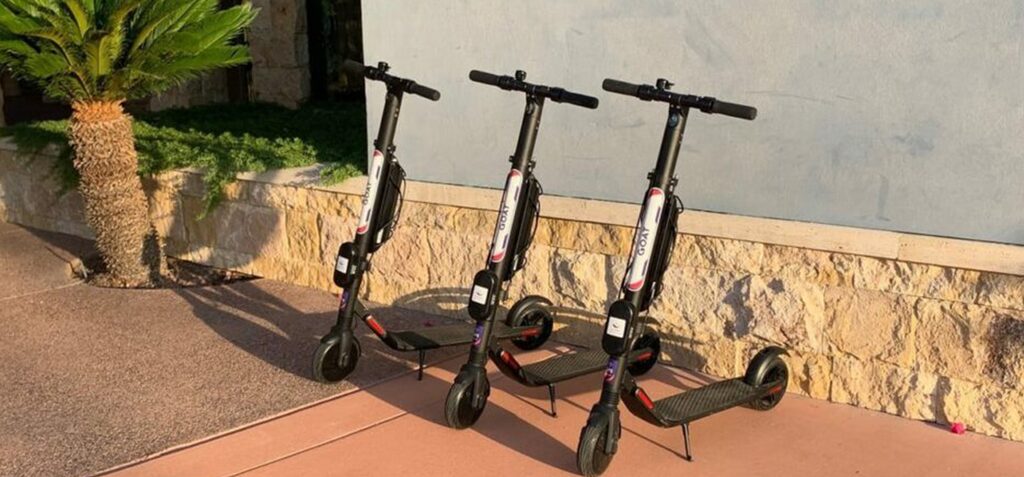
Build the strictest applicable rule into your in-app rider agreement and your hardware spec. Goat-branded units ship with mandatory front and rear lights and a default 15 mph cap that can be lowered geofence-by-geofence.
The 2026 federal landscape
Federal regulation of micromobility is still light. The Consumer Product Safety Commission (CPSC) regulates the hardware itself — battery safety standards, brake standards, lighting — and ongoing UL 2272 certification has become a de facto requirement for batteries on professional fleets. Several states (notably New York) now explicitly require UL 2272 certification for any leased or rented scooter. If you're sourcing hardware, confirm UL 2272 on the battery and ideally UL 2849 on the entire system.
The municipal RFP playbook (when you do need one)
If you're set on a public-property deployment, here's what's typically expected in a winning RFP response:
- Demonstrated operational experience (a working private deployment counts)
- Hardware specs and certifications
- Insurance documentation at $5M+ aggregate limits
- Equity and accessibility plan — discounted rides for low-income riders, ADA-compliant alternatives
- Rebalancing and parking enforcement plan
- MDS data integration commitment
- Local hiring commitments
- Carbon and sustainability claims with backing data
Cities now routinely award via points-based scoring. Read the rubric closely — a 10-point gap on equity programming will lose to a worse-priced bid every time.
HOA and property-owner agreements: the contracts that matter
For private deployments, your contract with the property owner replaces the city permit. Standard clauses to negotiate:
- Term and exclusivity: typical 1-3 year initial term with mutual right to renew
- Operating hours: some properties cap fleet availability to 6am-10pm
- Parking zones: defined locations on the property where scooters must rest
- Insurance and indemnification: as discussed in our insurance article — additional insured, primary/non-contributory
- Branding rights: can you wrap the scooters with your brand, the property's brand, or both
- Termination for cause: defined remedy periods on missed SLAs
- Renewal triggers: auto-renewal vs. mutual extension
ADA and accessibility considerations
Even on private property, ADA and state accessibility laws apply. Scooters parked blocking sidewalks or accessible routes can trigger complaints and, in some cases, formal legal action. Two practical defenses:
- Use end-of-ride parking photo verification in your app
- Define narrow corral zones with geofencing — units cannot be ended outside the corrals without a fee
This is where strict ops feeds directly back into compliance. Properties whose scooters block the wheelchair-accessible route around the cafeteria don't keep their contracts long.
Data privacy: rider data and surveillance
Your rider database is sensitive. State privacy laws (CCPA in California, similar laws in Virginia, Colorado, Connecticut, Texas) impose disclosure and deletion obligations on rider PII. Your app needs:
- A clear privacy policy with what's collected, how it's used, and retention periods
- Opt-out mechanisms for marketing communications
- A documented process to honor deletion requests within 45 days
- Encryption at rest and in transit for rider data
Cities running MDS programs typically require ride-level data, but federal courts have pushed back on requirements that include rider PII. Confirm what your city actually demands and whether a privacy challenge has been litigated locally.
The shortcut that actually works
If your goal is to be operating in 60-90 days rather than 12-18 months, target private property. The Power Design corporate campus deployment in St. Petersburg went from signed contract to first ride in under 45 days. No RFP. No city council. Just a contract, a COI, and a delivery date. As you build operating history on private deployments, you accumulate the case studies and metrics that make a future municipal RFP response credible.
Ready to launch your fleet?
If you're sizing the opportunity, run the numbers in our revenue calculator — plug in your own scooter count, ride volume, and pricing to project monthly gross. To see what's available right now, browse our pre-owned fleets (Segway Max 2.3 in great condition, 10-unit minimum) or email hello@ridegoat.com with your situation and we'll send a tailored proposal within one business day.