
Buying scooters is the largest single line item in launching a fleet, and the new-vs-pre-owned decision swings your payback period by 6-12 months. New gear is shiny and warrantied; pre-owned is cheaper and battle-tested. Both can produce great fleets when matched to the right operator and the right deployment. This article breaks down the actual ROI math so you can decide which path fits your situation.
The capex gap that drives everything
A new fleet-grade scooter from a reputable manufacturer runs $1,200-$1,800 per unit landed. Pre-owned units of the same caliber — particularly the Segway Max 2.3 platform that was the workhorse for many large operators in 2020-2023 — run roughly 40-60% less per unit, even after refurbishment.
For a 30-unit fleet, that's the difference between a $40K-$50K capex and a $20K-$25K capex. On a 50-unit fleet, the spread widens to $25K-$45K in cash you don't have to spend up front. That capital can fund six months of operations or a second deployment.
The payback math, side by side
Let's walk through a 30-unit fleet on a property-paid corporate campus contract at $250 per scooter per month.
New fleet scenario
- Capex: 30 units × $1,500 = $45,000
- Monthly recurring revenue: 30 × $250 = $7,500
- Monthly operating costs (labor, parts, insurance, software): ~$3,000
- Monthly net: $4,500
- Payback period: 10 months
Pre-owned fleet scenario (Segway Max 2.3)
- Capex: 30 units × $700 = $21,000
- Monthly recurring revenue: 30 × $250 = $7,500
- Monthly operating costs (slightly higher maintenance early): ~$3,400
- Monthly net: $4,100
- Payback period: 5 months
The pre-owned fleet pays back in roughly half the time. Across a 36-month contract, both scenarios produce healthy multi-year ROI, but the pre-owned path lets you take less capital risk and reach cash-positive faster.
The hidden costs nobody talks about
Both paths have hidden costs that don't show up on the spec sheet. Knowing them is the difference between a clean ROI projection and a surprise.

For new fleets
- Lead times of 8-16 weeks from order to delivery, especially for branded or custom configurations
- Minimum order quantities — many manufacturers won't sell below 50 units new
- First-generation hardware bugs that emerge once units are in the field
- Warranty support sometimes requires shipping units back internationally for repair
For pre-owned fleets
- Variable battery health — older packs may have 70-85% of original capacity
- Cosmetic wear that affects rider perception
- Smaller spare parts ecosystem if the model is end-of-life from the OEM
- Software that may not integrate with newer fleet management platforms
Reputable pre-owned providers refurbish before sale — replacing degraded batteries, swapping out worn brakes, recoating decks, and validating IoT modules. When you buy from someone like Ride Goat (Segway Max 2.3 inventory, 10-unit minimum), the unit you receive is field-ready, not as-is.
When new is the right call
Pre-owned isn't always the answer. There are situations where new gear is worth the premium:
- Premium-branded campus deployments: if the property wants the scooters to look brand new every day, custom-painted new units are the path of least resistance
- Deployments above 100 units: at scale, OEM relationships unlock support and pricing that pre-owned can't match
- Multi-year warranty needs: some property partners require warranties that pre-owned providers won't underwrite past 12 months
- Regulatory environments requiring latest-generation safety features: some cities now require specific UL certifications that older units don't carry
When pre-owned is the right call
Pre-owned dominates in these scenarios:
- Pilot deployments: testing a property type or market without committing to full new-fleet capex
- Geographic expansion: launching a second or third location while preserving cash for ops
- Budget-constrained landowners: hospitality and HOA partners often have hard budget caps that only pre-owned can clear
- Replacement units: backfilling a fleet after losses without re-ordering full lots from the OEM
- Solo or small-team operators: faster payback period means lower personal financial risk
What to verify before you buy pre-owned
Not all pre-owned inventory is created equal. Use this checklist before you sign:
- Battery cycle count and capacity: ask for the actual readout from the BMS, not a marketing number. Anything over 80% original capacity is good
- Frame and stem inspection: any visible weld cracks, stem play, or deck flex is an immediate disqualifier
- IoT module functionality: can the unit lock, geofence, and report position to your fleet platform
- Warranty terms: reputable refurbishers offer 90-180 days minimum on the powertrain
- Spare parts availability: confirm the supplier has parts inventory before you commit
- Photos of the actual units, not stock images: a refurbisher who won't share serial-number-matched photos is a red flag
The hybrid approach: best of both
The smartest fleet operators often run mixed fleets. Pre-owned units handle the bulk of utilization on day one, with a small contingent of new units in service to cover branded launch events, VIP requests, or premium high-visibility positioning. This gets you to revenue fast without sacrificing the polish that property partners want at launch.
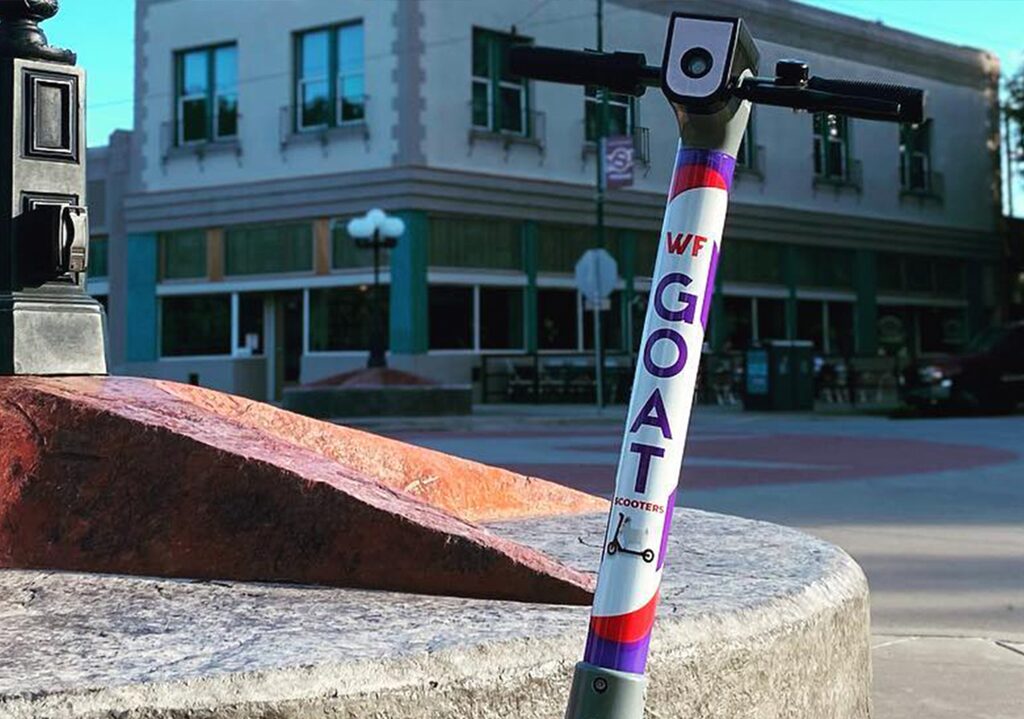
For a 30-unit deployment, a typical mix might be 24 pre-owned Segway Max 2.3 units plus 6 new Goat-branded Aike units in distinctive purple. The mixed fleet costs roughly $33K versus $45K all-new — a $12K savings — while still presenting a strong launch-day visual.
Ready to launch your fleet?
If you're sizing the opportunity, run the numbers in our revenue calculator — plug in your own scooter count, ride volume, and pricing to project monthly gross. To see what's available right now, browse our pre-owned fleets (Segway Max 2.3 in great condition, 10-unit minimum) or email hello@ridegoat.com with your situation and we'll send a tailored proposal within one business day.