

The pricing model you choose for your scooter fleet has a bigger impact on the P&L than the hardware you buy. The wrong model on the right deployment leaves 40-60% of revenue on the table. The right model on the wrong deployment can cap your growth or, worse, kill rider adoption before it ever gets started. This guide breaks down the four dominant models, when each one wins, and the actual numbers a 30-unit fleet would gross under each.
Model 1: Unlock fee plus per-minute
This is the standard public-fleet model: a flat fee to start the ride (typically $1-$2) plus a per-minute charge while the scooter is unlocked (typically $0.25-$0.40). Lime, Bird, and Spin all run variants of this structure, and riders are conditioned to expect it.
When it wins: high-frequency, short-trip environments where ride count matters more than ride length — downtown corridors, urban hotels, dense corporate campuses where staff are popping over to grab lunch.
The math, 30-unit fleet: at $2 unlock + $0.30/min, with 4 rides per scooter per day at an 8-minute average, that's $4.40 per ride × 4 × 30 = $528 per day, or about $15,800 per month gross. Payment processing eats roughly 3%, leaving ~$15,300.
The risk: riders watch the meter. If trips run long (campus is bigger than expected, or batteries run low and slow down), price sensitivity kicks in fast. You also have variance — bad weather weeks can crater monthly revenue 30% or more.
Model 2: Day pass / unlimited rides
A flat fee — typically $6-$15 — for unlimited rides during a 24-hour window. The rider pays once and stops thinking about cost.
When it wins: hotels, resorts, and tourist properties where guests want to use the scooter on impulse without doing math each time. Day passes also work for one-day events and conferences.
The math, 30-unit fleet at a 200-room resort: at $10/day with 25% of guests buying a pass, that's 50 passes per day × $10 = $500/day or about $15,000/month. Per-ride utilization tends to be higher (5-7 rides per pass), which means more wear and tear, but also more rider satisfaction and renewal likelihood.
The risk: heavy users abuse the model. A single guest doing 10 rides for $10 is unprofitable on a per-trip basis. Cap maximum daily usage if abuse becomes a pattern.
Model 3: Subscription / monthly membership
A monthly recurring fee — typically $25-$60 — for unlimited or capped rides. Riders pay through your app like Netflix.
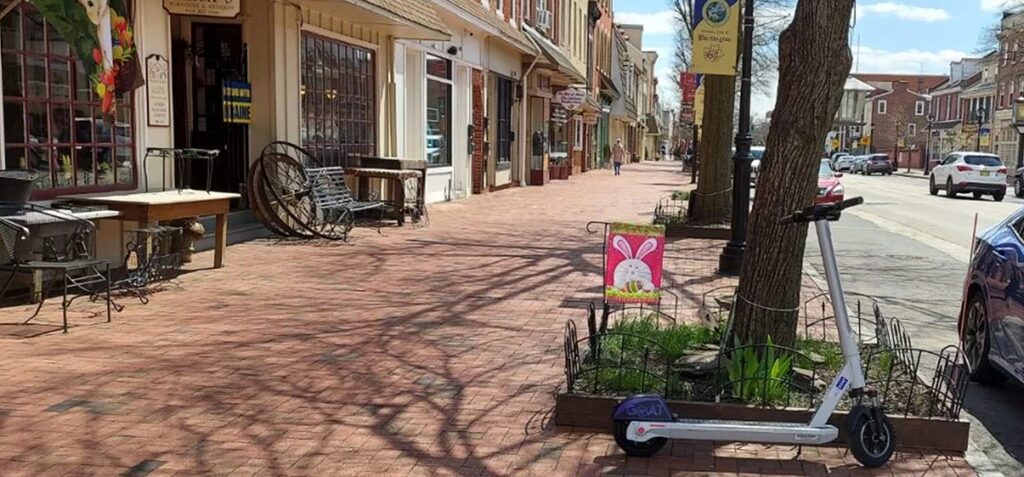
When it wins: employer benefit programs, residential communities, and any context where the same riders show up day after day. Subscription smooths your revenue curve and turns a transactional product into predictable MRR.
The math, 30-unit fleet on a corporate campus: at $35/month with 200 active subscribers (out of, say, 1,500 employees), that's $7,000/month recurring — lower than the per-minute model but with zero seasonality and dramatically lower payment processing volume.
The risk: conversion is harder than transactional pricing. You need a strong onboarding flow and ideally a free trial period. Churn discipline matters: a 10% monthly churn rate eats your CAC in a hurry.
Model 4: Property-paid (free to rider)
The property — campus owner, HOA, hotel, developer — pays a flat monthly fee per scooter and offers rides as an amenity at zero cost to the rider.
When it wins: Class A office portfolios, master-planned communities differentiating on amenities, hospitality groups using transportation as a guest experience play, and corporate campuses where the alternative is more parking spaces or more shuttle buses.
The math, 30-unit fleet: at $250/scooter/month, that's $7,500/month — guaranteed, regardless of weather, ridership, or season. Adoption is typically 3-5x higher than paid models because there's no friction, which strengthens the property's renewal case.
The risk: margin is fixed. You can't ride a great month to the upside. But you also can't get crushed by a bad one. For new operators, this is the lowest-variance way to learn the business.
Hybrid models: where most successful fleets actually land
The sharpest operators don't pick one model — they layer two. Common combinations:
- Property-paid base + per-minute overage: Property covers a baseline, riders pay for trips beyond a daily cap. Floors your revenue without capping the upside.
- Day pass + monthly subscription: Casual users buy a pass, repeat users upgrade. Captures both ends of the demand curve.
- Free first ride + per-minute thereafter: Lowers the trial barrier on launch day; converts curious riders into paying ones once they've felt the wind.
Power Design's Ride Goat deployment in St. Petersburg uses a property-paid model — the simplest fit for a single-tenant corporate campus. A multi-tenant business park or downtown property with public foot traffic would be a better candidate for a hybrid.
The metric that matters more than pricing
Whichever model you pick, the number that decides whether your fleet is healthy is rides per scooter per day. Below 2, you're losing money on almost any model. At 3-4, you're break-even. At 5+, you're printing. Pricing optimizations move the needle by 10-20%; utilization moves it by 200-400%. Get utilization right first, then tune the pricing on top of it.
Ready to launch your fleet?
If you're sizing the opportunity, run the numbers in our revenue calculator — plug in your own scooter count, ride volume, and pricing to project monthly gross. To see what's available right now, browse our pre-owned fleets (Segway Max 2.3 in great condition, 10-unit minimum) or email hello@ridegoat.com with your situation and we'll send a tailored proposal within one business day.