
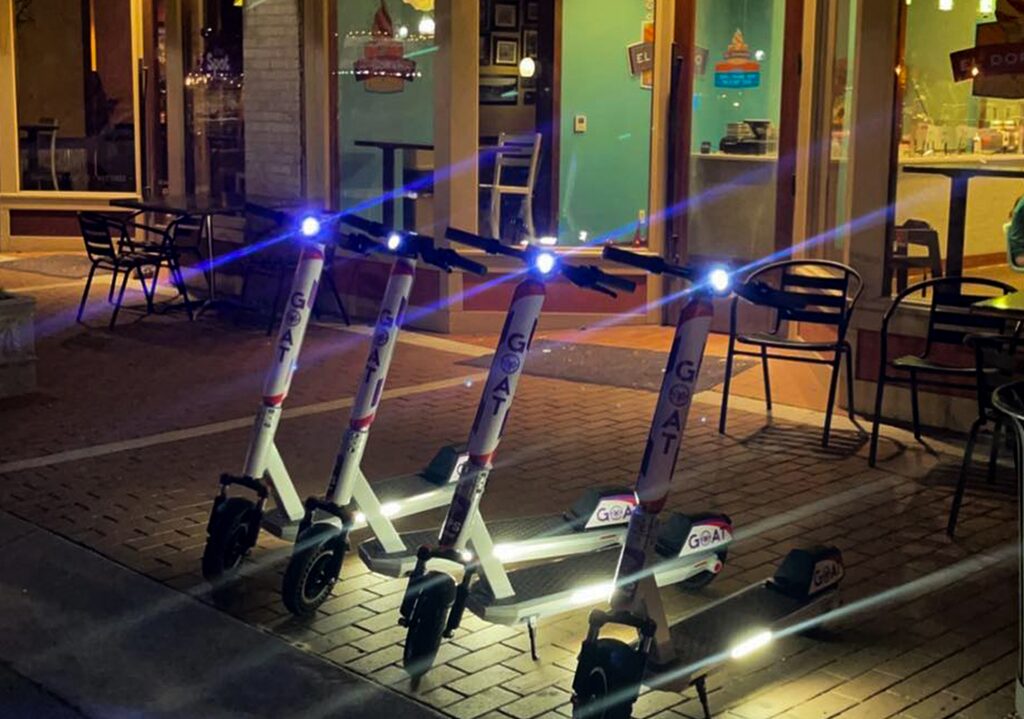
Beach towns are some of the best scooter markets in the country — and some of the most unforgiving. Demand is enormous but compressed: a coastal market can do 70% of its annual rides between Memorial Day and Labor Day. That concentration changes every operating decision, from hardware to staffing to what you do in February.
Why Beach Towns Outperform
Tourists are the perfect rider profile: no car, short trips, zero price sensitivity on a $6 ride during vacation, and a built-in reason to ride in both directions (beach ↔ restaurants ↔ lodging). Main strips are dense and flat, parking is scarce and expensive, and the scooter is part of the vacation. Utilization rates that would be fantasy in a suburb — 4–6 rides per scooter per day in peak weeks — are normal on a boardwalk in July. GOAT fleets already run in markets like Provincetown, Massachusetts, and across Florida's gulf coast.
The Seasonality Math
Model your year as three blocks: peak (90–120 days) carrying most of your revenue at high utilization, shoulder (60–90 days) of weekends-only demand, and off-season where the question is purely cost control. A 30-unit beach fleet doing 4 rides/day at $6 through a 110-day peak grosses about $79K in the peak alone — run your own inputs in the revenue calculator with operating days set honestly. The discipline is in the off-season: every dollar of fixed cost you carry through winter comes straight out of summer's margin.
Hardware for Sand, Salt, and Sun
- Salt air corrodes. Rinse-and-wipe is a daily ritual, not a deep clean. Budget extra for brake and fastener replacement.
- Sand kills pneumatic tires and bearings. Airless tires (standard on the GOAT X) remove the most common beach-market repair entirely.
- Heat degrades batteries. Stage swappable batteries in shade or indoors; never leave them baking in a van.
- Durability is the whole ROI. A vehicle with a 5-year design life amortized over four seasons is a different business than one that survives a single summer. Pre-owned fleets are a smart way to test a beach market before peak capex.
Permits in Tourist Towns
Small coastal municipalities are approachable but cautious — most have seen a scooter horror story on the news. Lead with order: defined parking corrals, geofenced no-ride zones on the boardwalk, automatic slow zones in pedestrian-heavy blocks, and a local phone number. Seasonal operating agreements (May–October) are often easier to win than year-round permits because the town's risk is bounded. Our 2026 permitting guide covers the process, and GOAT provides proposal templates and will assist with the town directly.
The Off-Season Playbook
- Store smart: batteries at ~50% charge indoors, vehicles cleaned and inspected before storage — winter is when next season's maintenance backlog gets cleared (see Fleet Operations 101).
- Redeploy a fraction: a corporate campus or year-round downtown nearby can keep 20–30% of the fleet earning through winter.
- Pre-sell the season: negotiate hotel and rental-property partnerships in winter, when general managers actually have time to talk. That 100% of local partnership revenue is yours.