If you have ever looked into bringing shared scooters to your town, campus, or property, you have probably compared the big names first. Bird and Lime built the category, and they remain the reference point everyone measures against. But "shared scooters" is not one business model — it is at least three, and the differences between them decide who owns the asset, who controls the market, and who keeps the revenue.
The Three Models of Shared Scooter Operations
Model 1: The venture-backed city operator. Bird and Lime are the canonical examples. They win permits from large cities, deploy thousands of vehicles they own (or once owned — Bird famously shifted to a fleet-manager model), and run operations through a mix of staff and gig workers. The city is the customer; riders are the revenue; local participants are contractors.
Model 2: The agency or concession program. Some cities and universities contract a single operator to run a program to spec. The operator is a vendor, the institution sets the rules, and the economics live in the contract rather than the ride.
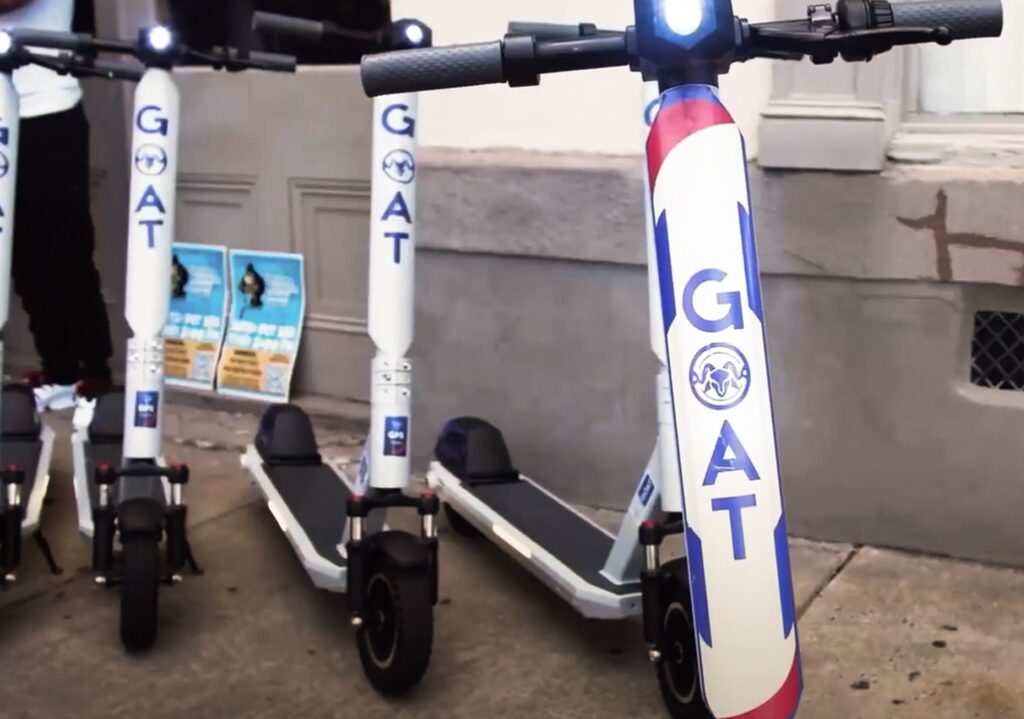
Model 3: Local fleet ownership. This is the GOAT model. You buy the fleet outright — 10 to 200+ units — and operate it in your own market with our platform, playbook, and support behind you. You are not a contractor in someone else's system. The vehicles, the local brand goodwill, and the revenue are yours.
Revenue — Who Keeps What?
This is where the models separate sharply. In the gig-style fleet-manager programs run by major operators, the platform typically keeps a substantial share of every ride before the local fleet manager sees a dollar — and the local partner still carries the labor of charging, rebalancing, and repairs.
With a GOAT fleet, the split runs the other way: operators retain 85–90% of ride revenue and profits, and 100% of local advertising and partnership revenue. The revenue share is tiered, so a bigger fleet earns a better split. That difference compounds — it is why GOAT operators can earn up to 3× more than they would running the same vehicles inside a major competitor's program. For the full math on what a fleet can produce, see How Much Can You Make with a Scooter Fleet? or run your own numbers in the revenue calculator.
Control — Who Makes the Decisions?
Pricing, fleet size, service area, parking rules, expansion timing: in a venture-backed program these are set centrally, optimized for a portfolio of hundreds of cities. If headquarters decides your market is unprofitable, the scooters disappear overnight — many small cities learned this the hard way when the majors retrenched.
A locally owned fleet cannot be pulled out from under you. You set pricing for your market. You decide whether to add ten more vehicles for the summer. You negotiate your own deals with the hotel down the street. GOAT provides the software guardrails — geofencing, speed zones, no-park zones — but the business decisions are yours.
Service Quality: The Underrated Difference
Locally owned and operated fleets get better treatment from riders, and the vehicles are better maintained. The operator lives in the market, knows the property managers by name, and answers the phone when a scooter ends up somewhere it shouldn't. That shows up in vehicle lifespan, in city relationships, and ultimately in margins.
Who Is GOAT Best For?
- Entrepreneurs in smaller, dense markets — the hundreds of towns, beach communities, and college towns the majors skip entirely.
- Property and campus owners who want scooters as an amenity with revenue attached, not a city-wide ride-share experiment.
- Operators leaving gig programs who already do the work of charging and rebalancing and want to own the upside.
If you are weighing the majors against ownership, the honest comparison is not brand recognition — it is who keeps the revenue, who controls the market, and who is still there in three years. Start with our guide on how to start a scooter fleet, or email hello@ridegoat.com for a market assessment.